Identity Card
 National Identity Document
 Citizenship ID
 Unique Identity Document
 Personal Identification Document
 Unique Population Registry Code
 Personal Identity Card
 Civil Identity Card
 Identity and Electoral Card
 Check Plate Colombia
 Check Plate Peru
 Check Plate Mexico
 Check Plate Argentina
 Check Plate Chile
 Check Plate USA
 Check Plate Brazil


A well-built fintech eKYC platform moves a real user from signup to verified account in about a minute, while stopping the fake identities that fraudsters keep pushing through.
Two out of three people who start a digital account application never finish it: the average abandonment rate is 67%, according to research on digital account opening. Most drop out during identity verification, which means the signup flow is both the growth engine and the biggest leak.
This post walks through each stage of the flow, shows what happens when a check fails, and explains where good users drop off. For the full picture of requirements and benefits, see our guide to eKYC for fintech.
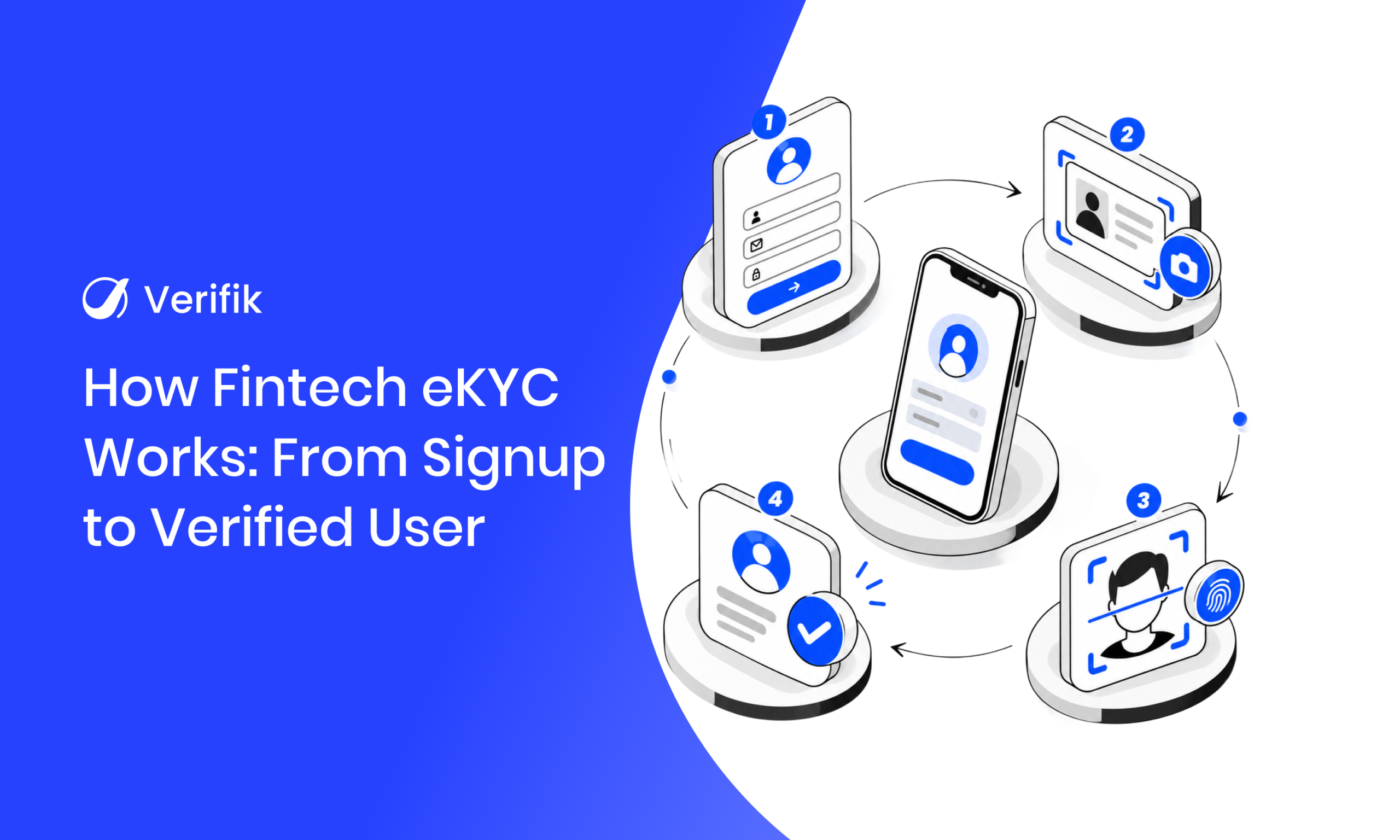
The Five Stages of the Signup Flow
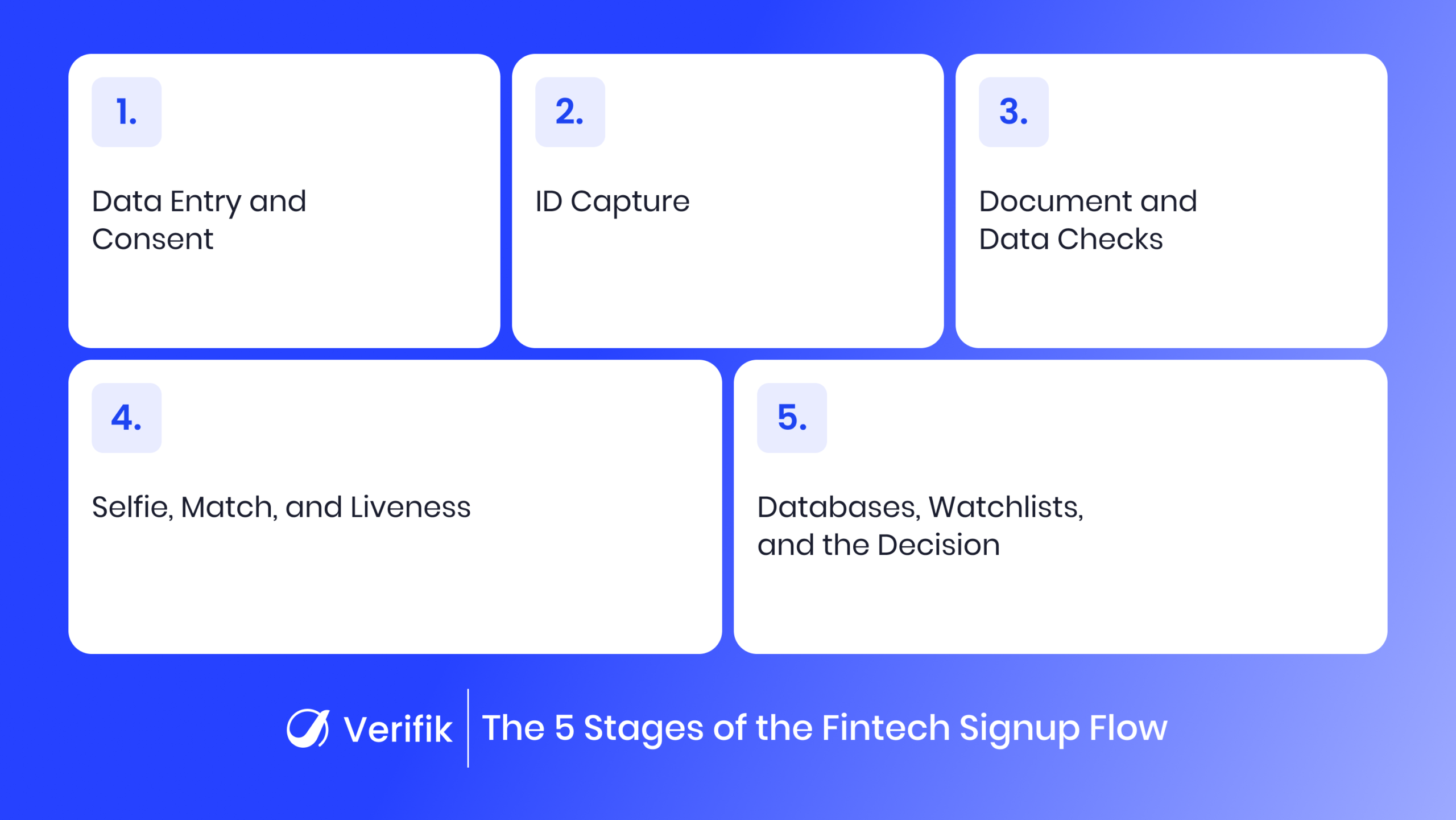
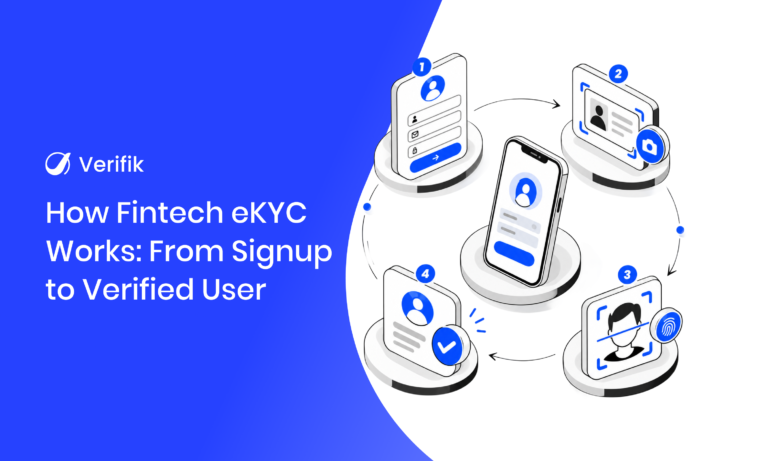
A fintech eKYC flow runs five stages in order. Each stage catches different attacks, and each stage can lose real users if designed badly.
1. Data Entry and Consent
The user enters a name, date of birth, and contact details, then consents to identity checks. Keep this screen short: every field costs completions. Consent wording must be clear and specific, because data protection rules in most markets require proof the user agreed. The full list of what a fintech has to collect is in our KYC requirements checklist for fintech startups.
2. ID Capture
The user photographs a government ID with a phone camera. Good flows guide the shot in real time, warning about blur, glare, and cropped edges before the photo is accepted.
Capture conditions are messy: poor light, cracked screens, older cameras. Most first-try failures happen here, not because the user is a fraudster, but because the photo is bad.
3. Document and Data Checks
The system reads the ID, pulls names and numbers into structured fields, and analyzes the document for forgery: replaced photos, wrong fonts, damaged security features. A genuine ID in the wrong hands still passes a document check, so this stage alone is never enough.
4. Selfie, Match, and Liveness
The user takes a live selfie. The system matches the face to the ID photo and confirms a real person is in front of the camera, blocking printed photos, replayed videos, and masks. Passive liveness needs no head movements, which keeps this step fast and frustration-free.
5. Databases, Watchlists, and the Decision
The extracted identity data is checked against government registries, credit sources, sanctions lists, and PEP databases. In Latin America this means local depth: Colombia’s RUES and SIMIT, Brazil’s CNPJ, Argentina’s CUIT, and the ID systems behind the cédula, Mexico’s INE, and Peru’s DNI. All signals combine into one decision with a full evidence record.
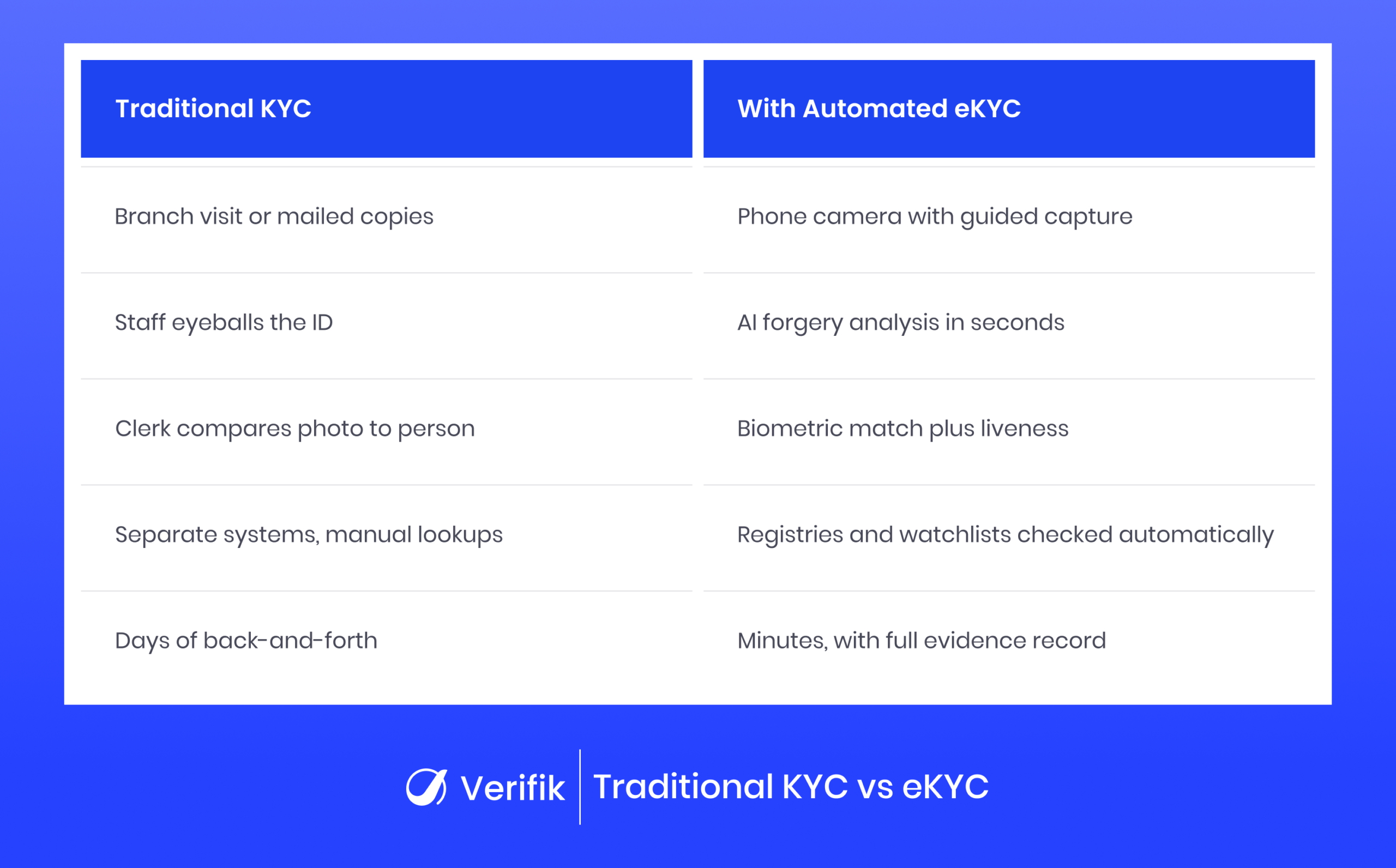
For this step, Verifik's option is smartENROLL: move your KYC to a digital flow with evidence for every check.
What Happens When a Check Fails
Failures are normal. What separates good eKYC from bad eKYC is the recovery path, and a strong KYC solution for fintech treats most failures as fixable.
Instant Retries Come First
Most failures are capture problems, not fraud. A blurry photo should trigger an instant retry with specific guidance, not a rejection. The retry loop should be fast, clear, and limited so genuine users succeed within two or three attempts.
Unclear Cases Go to Human Review
When automated checks cannot decide, the case lands in a review queue with an evidence bundle: the captured images, what passed, what failed, and which risk signals fired. The reviewer sees the full story on one screen.
Where Good Users Drop Off
The longer an application takes, the more applicants give up. Forcing users out of the digital channel to visit a branch or post documents is the fastest way to lose them to a competitor.
The lesson is order: run cheap checks first, ask for heavy verification only when risk justifies it, and never make a low-risk domestic user feel like a suspect.
Fraud pressure keeps rising, with criminals pushing stolen and synthetic identities through new-account flows, so the answer is smarter sequencing, not fewer checks. The same sequencing has to hold up when a fintech launches in new countries, which we cover in our guide to fintech KYC in new markets.
How Long the Whole Thing Takes
For a clear case, the full flow takes under a minute: ID photo, selfie, decision. That is the experience your funnel should be designed around.
Unclear cases that need human review take longer, from minutes to hours depending on queue size and reviewer staffing.
An eKYC software for fintechs should show you exactly what share of users goes straight through, what share retries, and what share needs review, because those three numbers define your conversion rate and staffing plan.
Why Fintechs Choose smartENROLL for eKYC
smartENROLL is Verifik’s eKYC solution built for fintechs in Latin America, where many ID formats, strict regulators, and uneven registry access make generic global tools struggle.
Document Verification Tuned for the Region
Reads and checks Latin American national IDs, passports, and driver’s licenses, including formats global vendors often misread.
Guided Capture That Raises Pass Rates
Real-time guidance on blur, glare, and framing fixes the most common failure point before it becomes an abandonment.
Biometrics With Passive Liveness
Matches the face to the ID photo and confirms a live person is present, without awkward head-movement exercises.
Deep Database Validation
Checks users against local registries such as RUES and SIMIT plus international sources, across dozens of Latin American data endpoints.
Reviewer Handoffs That Save Hours
Unclear cases arrive with the full evidence bundle on one screen, so manual review takes minutes, not days.
API-First, Built for Fintech Stacks
REST API, mobile SDKs, and a sandbox mean your developers integrate in days and test with real documents before launch.
Want to watch the five stages on your own signup flow? Book a free demo and see a live verification from data entry to decision.

Conclusion
Fintech eKYC is five stages: data entry, ID capture, document checks, selfie with liveness, and database screening ending in one evidence-backed decision. Most failures are fixable capture problems, and winning flows treat retries and reviewer handoffs as carefully as the checks.
Run your own applicants through the flow and watch where they hesitate. smartENROLL is built for that test, with Latin American document and registry coverage that keeps both conversion and fraud control high.
Frequently Asked Questions (FAQs)
Why do most eKYC failures happen at ID capture?
Because capture is where the real world intrudes: poor light, cracked screens, glare, and old cameras. Most first-try failures are bad photos, not fraud. Guided capture with real-time warnings about blur and framing raises pass rates more than any later tuning.
Should database checks run before or after biometrics?
Run the cheap, fast checks first and the expensive ones later. Document capture and extraction are cheap, biometrics cost a little more, and deep database queries cost the most. Ordering by cost means most fraud fails early and cheaply, while low-risk users skip checks they do not need.
What should a reviewer see in manual review?
The full evidence bundle on one screen: the captured ID images, the extracted data, what passed, what failed, which risk signals fired, and the applicant’s retry history. A reviewer who sees the whole story decides in minutes; one who opens five systems takes days.
How do we keep verification under a minute without weakening controls?
Sequence, not subtraction. Run document capture, extraction, and forgery analysis in parallel with the selfie and liveness step, then hit databases only for cases the early signals cannot clear. Clear cases finish in seconds at full strength; only the uncertain minority pays for heavy checks.
What makes smartENROLL the best eKYC flow solution for fintechs?
smartENROLL runs the five stages in one workflow built for this region: guided capture that fixes the main failure point, passive liveness that keeps the flow fast, and database validation across RUES, SIMIT, CNPJ, CUIT, and the ID systems behind the cédula, INE, and DNI. Reviewer handoffs arrive with the evidence bundle on one screen.