 Identity Card
 National Identity Document
 Citizenship ID
 Unique Identity Document
 Personal Identification Document
 Unique Population Registry Code
 Personal Identity Card
 Civil Identity Card
 Identity and Electoral Card
 Check Plate Colombia
 Check Plate Peru
 Check Plate Mexico
 Check Plate Argentina
 Check Plate Chile
 Check Plate USA
 Check Plate Brazil


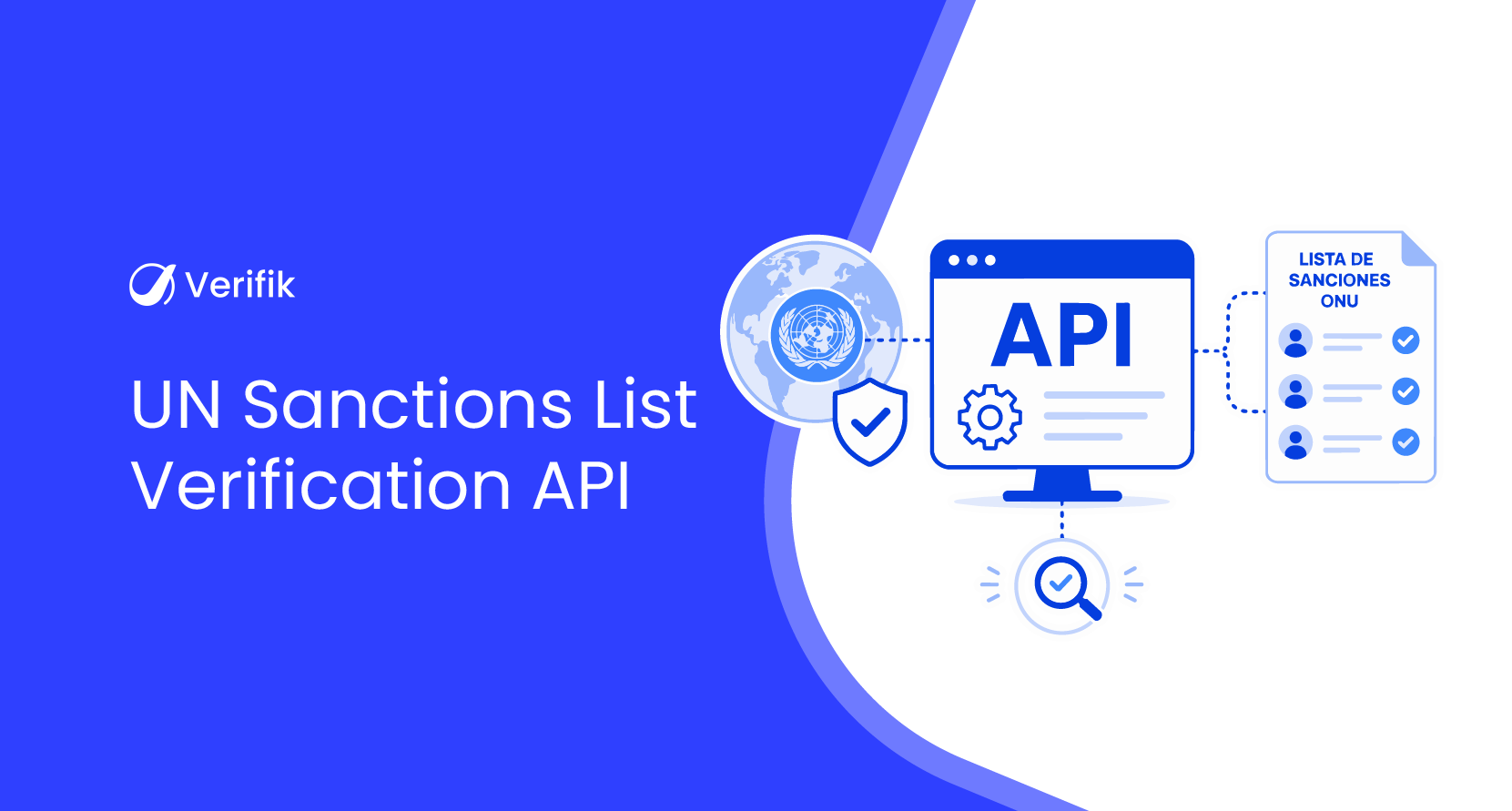
In a global economy where compliance risks can escalate instantly, organizations must ensure they are not engaging with individuals or entities listed on international sanctions databases. One of the most important frameworks in this space is the United Nations (UN) Sanctions List, which identifies individuals and organizations subject to global restrictions under UN Security Council resolutions.
The Verifik UN Sanctions Screening API enables businesses to automate UN sanctions screening in real time, helping them stay compliant, reduce risk exposure, and streamline KYC/AML processes across international operations.
What Is the United Nations Sanctions List?
The United Nations Sanctions List is a consolidated database maintained by the UN Security Council. It includes individuals, groups, and entities subject to international measures such as asset freezes, travel bans, and arms embargoes.
These sanctions are imposed to address global threats including terrorism, conflict financing, human rights violations, and other risks to international peace and security.
Each listed entry is part of a targeted sanctions regime managed by specific UN committees, and countries are required to implement these measures under international law.
Because the list is continuously updated, organizations must perform regular screening to avoid dealing with restricted parties.
To follow this guide with your own integration, open a Verifik account and generate your access token.
Why Manual UN Sanctions Screening Is Not Enough
Traditional compliance teams often rely on manual or periodic checks of sanctions lists. However, this approach creates serious limitations:
- Frequent updates are difficult to track manually
- High risk of missing newly added sanctioned entities
- Slow onboarding and transaction approval processes
- Increased compliance workload and operational cost
In fast-moving industries like banking, fintech, and global trade, manual screening simply cannot keep up with real-time risk requirements.
Introducing the Verifik UN Sanctions List Verification API
The UN Sanctions List Verification API by Verifik is a real-time screening solution that allows organizations to verify whether a person or entity appears on the UN sanctions list. Instead of searching manually through UN records, businesses can perform instant checks through a secure API call and receive structured results in seconds.
It supports flexible search options:
- Document-based lookup using ID type and number
- Name-based lookup using full name
The API returns structured results indicating:
- Whether a match was found
- Identity details of the subject
- Relevant sanctions flags when applicable
This transforms UN sanctions compliance into a fully automated and scalable workflow.
Key Benefits of Automating UN Sanctions Checks with Verifik API
Real-Time Global Compliance
The UN Sanctions Screening API enables instant verification against the United Nations sanctions list, ensuring organizations can detect restricted individuals or entities at the exact moment of onboarding or transaction initiation. With real-time checks through the API, businesses can prevent risky engagements before they occur instead of reacting after exposure. This makes compliance continuous, automated, and significantly more reliable in fast-moving environments.
Reduced Regulatory Risk
Automating UN sanctions checks through Verifik API significantly reduces the chances of non-compliance with international regulations. Manual screening methods often miss updates or introduce human error, which can lead to penalties and reputational damage. By using the API, organizations consistently align with global sanctions requirements and minimize exposure to financial and legal risks.
Faster Onboarding and Transactions
The API-driven UN sanctions screening process removes delays from compliance workflows by delivering instant screening results. Customers, partners, and transactions can be approved in real time without waiting for manual reviews. This improves onboarding speed, enhances user experience, and allows businesses to scale operations without compliance bottlenecks.
Improved Accuracy and Standardization
Automation through the UN Sanctions List Verification API ensures every check follows a consistent validation process, reducing variations caused by human judgment. This leads to more accurate and standardized compliance decisions across teams and geographies. It also improves trust in the verification process, especially in regulated industries where precision is critical.
Scalable Compliance Infrastructure
The API is designed to support both small-scale and enterprise-level compliance needs, handling high volumes of screening requests efficiently. Whether processing hundreds or millions of checks, performance remains stable and reliable. This scalability allows organizations to expand globally without rethinking their compliance architecture.
How the UN Sanctions Screening API Works
The process is simple and designed for seamless integration into existing systems:
Submit Identity Data
You provide input such as full name, document type, or document number through a secure API request.
Automated UN List Screening
The system compares the input against the United Nations sanctions database, including consolidated lists of restricted individuals and entities.
Instant Response Output
The API returns a structured result indicating whether a match was found, along with identity details and verification status.
Common Use Cases for Verifik UN Sanctions Screening API
KYC and Customer Onboarding
Financial institutions and fintech platforms integrate Verifik UN Sanctions Screening API directly into their onboarding workflows to verify customers in real time. Every new user is checked against the United Nations sanctions list before account creation is approved. This helps ensure only compliant and low-risk customers enter the system, strengthening overall KYC processes.
AML and Financial Compliance Programs
Banks and regulated entities use the screening capability as part of their anti-money laundering (AML) frameworks. By automating sanctions checks during transactions and account monitoring, organizations can quickly identify high-risk individuals and take preventive action before financial crime exposure occurs.
Corporate Due Diligence and Partnerships
Before entering partnerships, vendor agreements, or supplier relationships, companies use the Verifik UN sanctions screening API to assess potential risks. This helps identify whether a business or individual is linked to sanctioned entities, ensuring safer and more transparent commercial relationships.
Cross-Border Payments and Trade
Businesses involved in international payments and trade rely on automated US sanctions list verification to validate counterparties before processing transactions. This ensures that no restricted entity is involved in cross-border financial activity, reducing the risk of regulatory violations across jurisdictions.
Insurance and Risk Evaluation
Insurance providers use sanctions screening during underwriting to better evaluate applicant risk profiles. This allows them to issue policies with greater confidence while ensuring compliance with global regulatory standards and internal risk policies.
Global Compliance and Regulatory Reporting
Organizations operating across multiple regions use automated UN sanctions checks to support compliance reporting and audits. The screening process creates a reliable record of due diligence, helping businesses demonstrate adherence to international regulations when required.
Why Choose Verifik for UN Sanctions Screening?
The Verifik UN Sanctions Screening API is built for modern compliance systems that require speed, reliability, and scalability. It eliminates manual dependency and enables continuous sanctions monitoring through automation.
By integrating it into your workflows, you ensure that every customer, partner, or transaction is screened against authoritative UN data in real time.
Wrapping Up
The United Nations Sanctions List plays a critical role in global financial and security compliance. However, manual verification methods cannot keep up with today’s speed and scale of digital operations.
The UN Sanctions Check API by Verifik enables real-time, automated sanctions screening that helps organizations stay compliant, reduce risk, and operate confidently across international markets.
Contact Verifik today to integrate the API and automate real-time UN sanctions screening across your compliance workflows.