 Identity Card
 National Identity Document
 Citizenship ID
 Unique Identity Document
 Personal Identification Document
 Unique Population Registry Code
 Personal Identity Card
 Civil Identity Card
 Identity and Electoral Card
 Check Plate Colombia
 Check Plate Peru
 Check Plate Mexico
 Check Plate Argentina
 Check Plate Chile
 Check Plate USA
 Check Plate Brazil


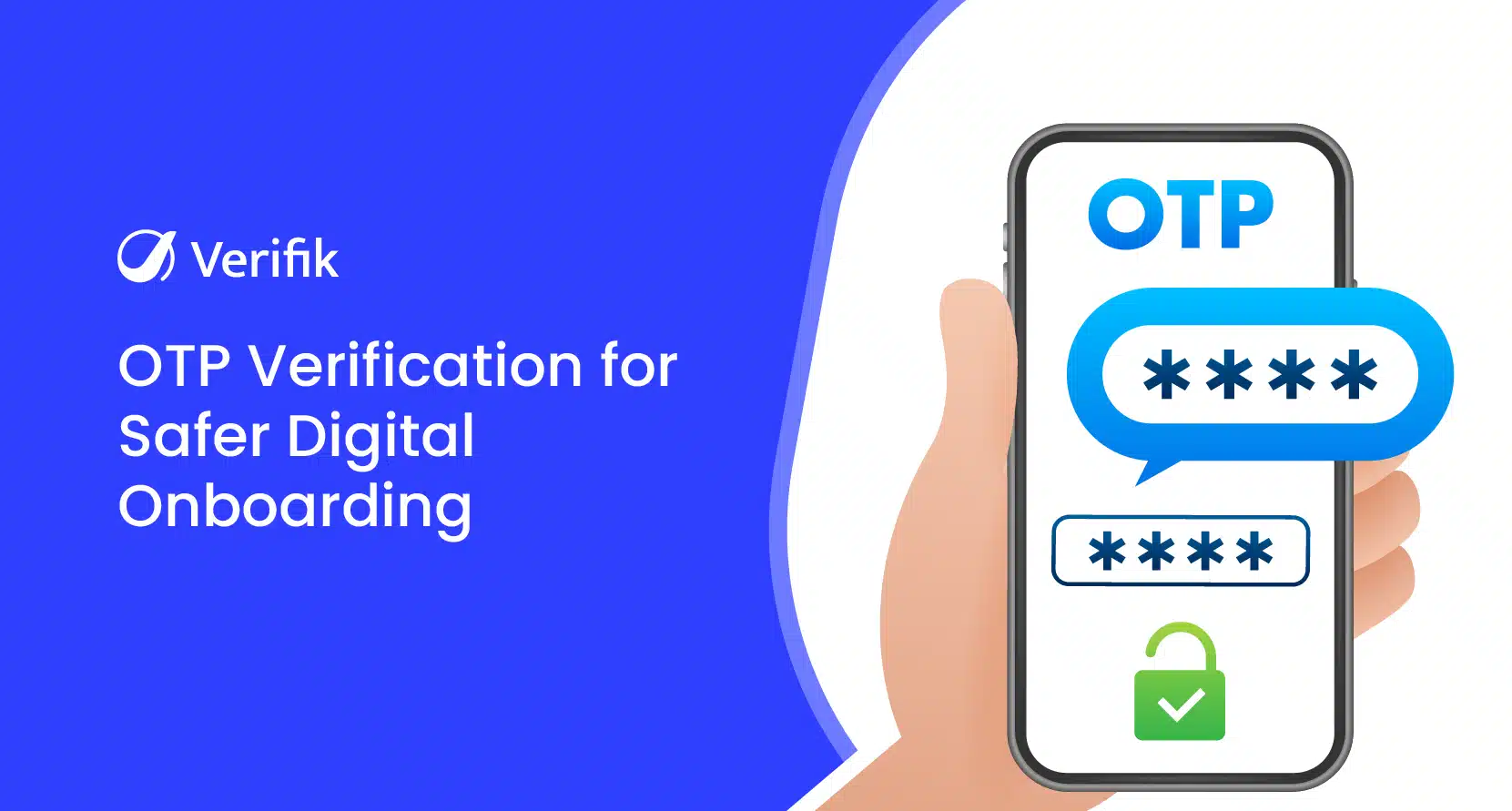
Digital onboarding has grown rapidly across industries like banking, fintech, telecom, e-commerce, ride-hailing services, and government platforms. With more people creating accounts online, businesses must protect users from identity fraud and unauthorized access. One of the simplest and most reliable ways to do this is OTP verification. OTP, or One Time Password, adds a strong layer of identity confirmation during sign up and ensures that only the real user can complete the onboarding journey.
This guide explains how OTP verification works, why it is an important part of secure onboarding, and how businesses can use it effectively. You will also see how solutions like smartENROLL use OTP verification as part of an end-to-end identity verification process, combining it with document checks, biometrics, and database validation to create a seamless yet secure onboarding experience.
What is OTP Verification?
OTP, or One-Time Password, is a single-use, time-limited code sent to a user to confirm their identity. Unlike static passwords, OTPs are valid only for a short period and can only be used once, making them far less vulnerable to hacking or theft.
Businesses deliver OTPs through multiple channels, including SMS, email, authenticator apps, or even voice calls, depending on the user’s preferences and security requirements. The key idea is to link the account to a verifiable contact method, ensuring that only the legitimate user can complete the onboarding process.
Solutions like smartENROLL automate OTP generation and delivery, making it an integral part of a secure digital onboarding workflow that is both fast and reliable.
How OTP Verification Works in Digital User Onboarding
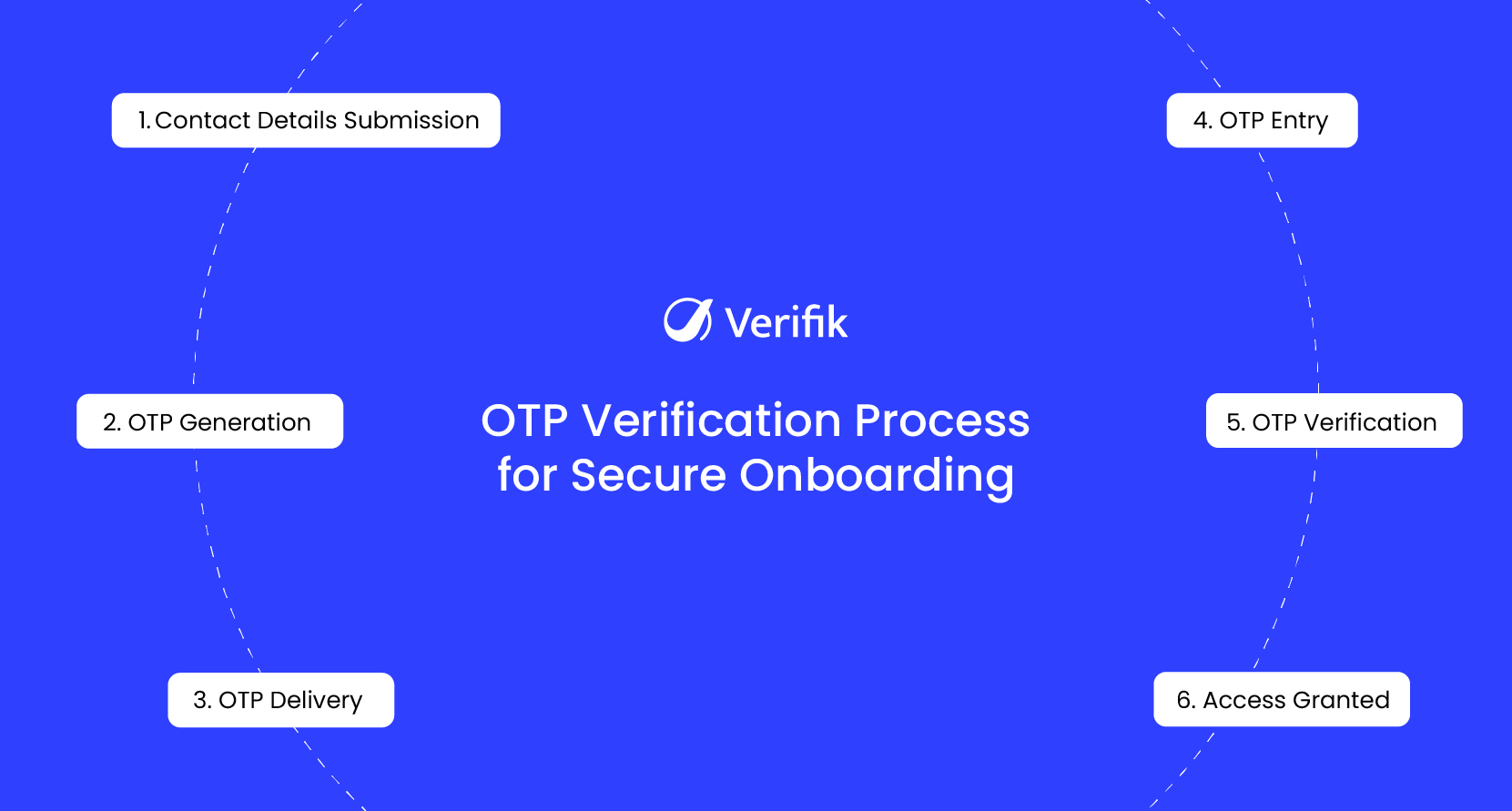
A typical OTP onboarding flow includes:
- User enters contact details (phone or email)
- System generates a unique OTP
- OTP is sent to the user via SMS, email, or app
- User enters the OTP on the onboarding page
- System verifies the OTP
- Access or registration is approved
To enhance security, OTPs:
- Expire within seconds or minutes
- Are randomly generated
- Cannot be reused
- Are rate-limited to prevent brute-force attempts
This ensures both speed and protection throughout the onboarding process.
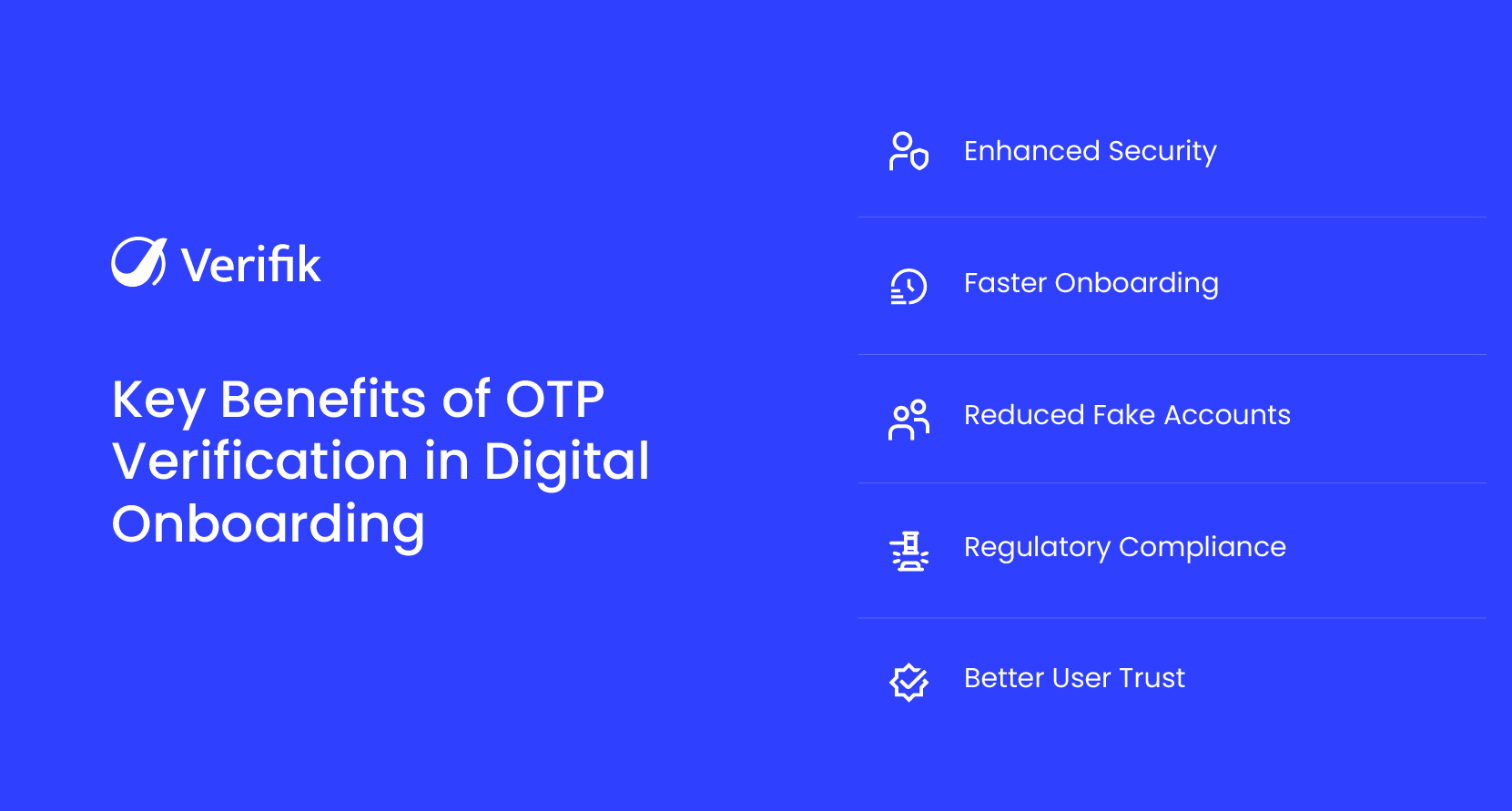
Key Benefits of OTP Verification in Digital Onboarding
OTP verification offers a strong balance between security, speed, and user convenience. By confirming that users genuinely own the phone number or email they provide, businesses can prevent fraud while maintaining a smooth onboarding experience. Below are the key benefits of integrating OTP verification into digital onboarding workflows.
-
Enhanced Security and Fraud Prevention
OTP verification strengthens onboarding security by ensuring that only users with verified and active contact details can proceed. Since OTPs are time-sensitive and single-use, they significantly reduce the risk of unauthorized access, credential stuffing, and account takeover attempts.
This method also helps block automated bots and malicious actors who attempt to create fake accounts at scale. By adding a real-time verification step, businesses can filter out suspicious users early and protect their platforms from identity fraud and data misuse.
-
Faster and Frictionless Onboarding
One of the biggest advantages of OTP verification is its ability to deliver security without slowing down the onboarding process. Unlike lengthy manual verification steps, OTP authentication happens instantly, allowing users to verify their identity within seconds.
This creates a smoother and more convenient onboarding experience by reducing drop-off rates and improving customer conversion. When users can sign up quickly and securely, they are more likely to complete registration and start using the service right away.
-
Reduced Risk of Fake or Duplicate Accounts
Fake and duplicate accounts can harm platform integrity, increase fraud risk, and inflate operational costs. OTP verification helps prevent this by confirming that each account is linked to a unique and reachable phone number or email address.
This is particularly valuable for industries such as fintech, telecom, and e-commerce, where fraudulent registrations can lead to financial losses or misuse of promotional offers. By enforcing OTP validation, businesses can maintain a cleaner and more trustworthy user base.
-
Improved Regulatory Compliance
OTP verification plays a supportive role in meeting regulatory requirements related to KYC (Know Your Customer) and AML (Anti-Money Laundering). Verifying user contact information adds an extra layer of identity assurance and strengthens customer due diligence processes.
It also helps organizations maintain accurate audit logs, transaction records, and verification trails. These records are valuable during compliance audits, regulatory reporting, and investigations into suspicious activity, making OTP an important component of compliant digital onboarding.
-
Better User Trust and Experience
Trust is a critical factor in digital onboarding, especially when users are sharing personal or financial information. OTP verification reassures users that the platform takes security seriously and is committed to protecting their accounts.
When users see visible security measures in place, they feel more confident in completing registration and continuing to use the service. At the same time, OTP verification remains simple and intuitive, ensuring that security improvements do not come at the cost of user convenience.
Best Practices for Implementing OTP in Digital Onboarding
While OTP verification is a powerful security tool, its effectiveness depends on how well it is implemented. Following proven best practices helps businesses strengthen onboarding security, prevent fraud, and maintain a smooth user experience without adding unnecessary friction.
1. Use Secure OTP Generation
OTP codes should be generated using strong randomization and encryption to ensure they cannot be guessed or manipulated. Weak or predictable OTP patterns can expose systems to security risks and unauthorized access.
Using cryptographically secure algorithms ensures that each OTP is unique, difficult to replicate, and safe from exploitation. This forms the foundation of a secure and reliable verification process.
2. Set Short Expiry Times
To reduce the risk of OTP misuse, it is important to limit how long an OTP remains valid. Short expiration windows ensure that even if a code is intercepted, it cannot be reused after a brief period.
Time-bound OTPs also encourage users to complete verification quickly, improving both security and onboarding speed. Striking the right balance between usability and security is key to maintaining a seamless experience.
3. Offer Multi-Channel Delivery
Not all users have consistent access to the same communication channel, so offering multiple OTP delivery options improves reliability and convenience. Supporting SMS, email, and app-based OTPs ensures that users can receive verification codes even if one channel is delayed or unavailable.
Multi-channel delivery also enhances accessibility across regions and devices, reducing onboarding failures and improving overall completion rates.
4. Implement Rate Limiting and Retry Controls
Limiting the number of OTP attempts is essential to preventing brute-force attacks and abuse. Rate limiting helps block malicious actors who try to guess OTPs by repeatedly submitting incorrect codes.
At the same time, retry controls should be designed to support legitimate users who may enter a wrong code by mistake. A balanced approach ensures strong security while keeping the experience user-friendly.
5. Combine OTP with Identity Verification
OTP verification is most effective when it is part of a broader identity verification strategy rather than a standalone security measure. Combining OTP with document verification, facial recognition, liveness detection, and fraud monitoring, as offered through smartENROLL, gives businesses a powerful layered defense against identity fraud.
This multi-factor approach ensures that users are not only reachable through verified contact information but are also genuinely who they claim to be, which significantly strengthens onboarding integrity.
Conclusion
OTP verification plays a vital role in making digital user onboarding safer, faster, and more trustworthy. By confirming user contact details in real time, OTP helps businesses prevent fraud, reduce fake account creation, and improve overall security without adding friction to the user experience. When combined with identity verification technologies such as document verification and biometrics, OTP becomes part of a stronger, multi-layered defense against identity fraud.
Experience Smarter OTP-Based Onboarding
Want to enhance your onboarding security while keeping it fast and frictionless? Book a free demo of smartENROLL and discover how OTP verification combined with advanced identity verification can help you onboard users securely, efficiently, and at scale.