 Identity Card
 National Identity Document
 Citizenship ID
 Unique Identity Document
 Personal Identification Document
 Unique Population Registry Code
 Personal Identity Card
 Civil Identity Card
 Identity and Electoral Card
 Check Plate Colombia
 Check Plate Peru
 Check Plate Mexico
 Check Plate Argentina
 Check Plate Chile
 Check Plate USA
 Check Plate Brazil



Digital onboarding has become a crucial part of how companies welcome new customers today. Whether someone wants to open a bank account, sign up for a financial app, access a health platform, or register on an eCommerce site, they expect the process to be simple and secure. This expectation has pushed businesses to rethink how they verify identities and prevent fraud without creating unnecessary friction.
Identity verification sits at the heart of this shift. It helps companies confirm that users are who they claim to be and protects both customers and businesses from growing threats like identity theft, impersonation, and synthetic fraud. As digital interactions increase, strong verification is no longer optional. It is a core requirement for trust, compliance, and growth.
What Is Identity Verification in Digital Customer Onboarding?
Identity verification in digital onboarding is the process of confirming that a user is who they claim to be during online registration. It typically involves collecting personal data, validating official documents, verifying biometrics, and cross-checking databases.
Unlike traditional in-person verification, digital identity verification enables remote onboarding, allowing businesses to onboard customers faster while maintaining high security standards.
Why Identity Verification is Essential for Secure Digital Onboarding
Digital onboarding exposes businesses to identity fraud, fake accounts, account takeovers, and regulatory risks. If you want to explore how these risks take shape in real onboarding environments, you can read our blog on “Common Types of Identity Fraud in Digital Onboarding” for a closer look at the most frequent fraud tactics businesses encounter today.
Effective identity verification helps organizations:
- Prevent identity fraud and impersonation
- Meet KYC, AML, and regulatory requirements
- Build customer trust and brand credibility
- Reduce onboarding drop-offs
- Improve operational efficiency
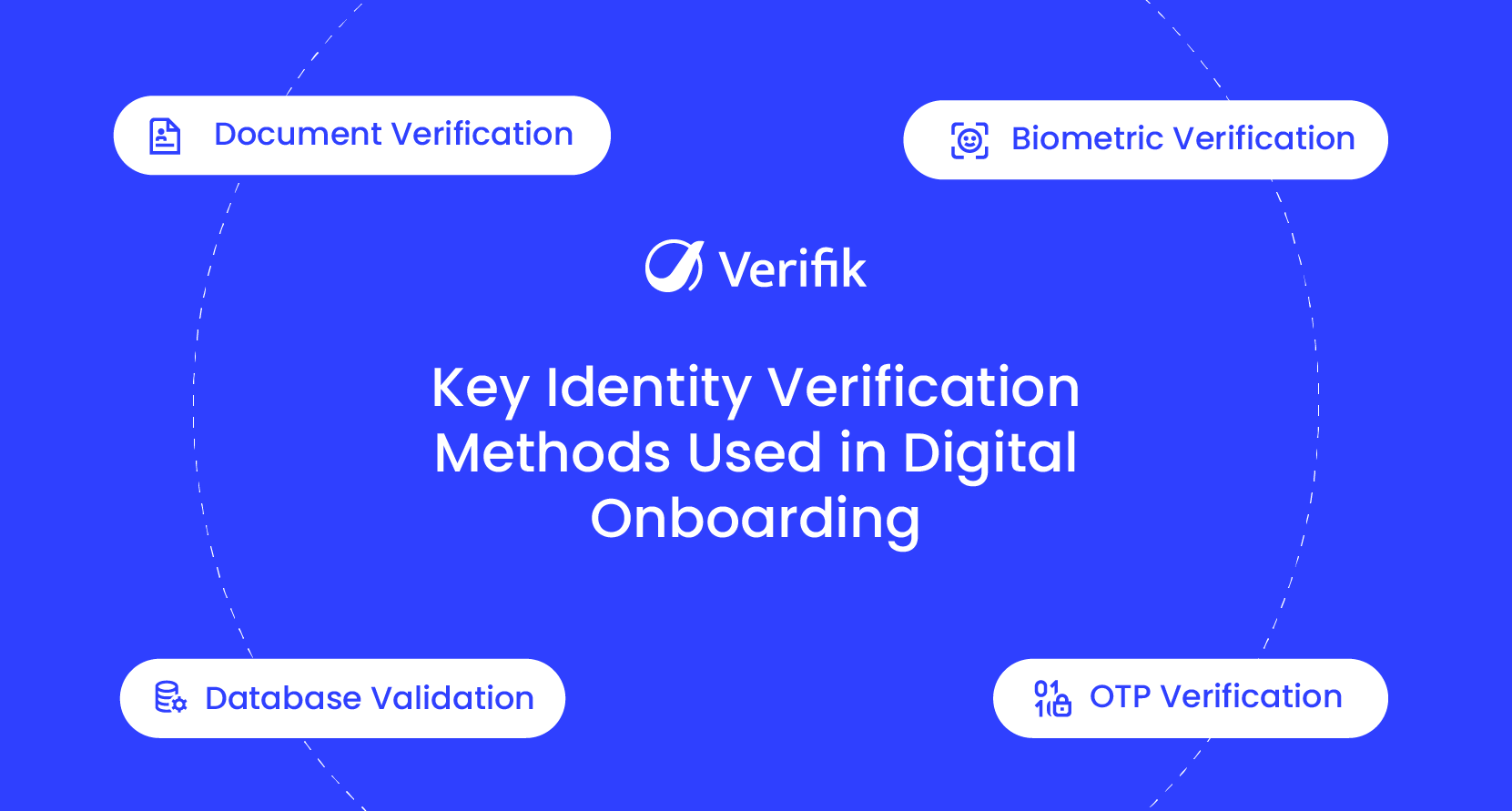
Key Identity Verification Methods Used in Digital Onboarding
Identity verification involves several layers that work together to confirm a user’s identity. Here are the most widely used methods.
1. Document Verification
Users submit a national ID, passport, driver’s license, or another government document. Technologies like OCR extract data from these documents to ensure accuracy and authenticity. Automated document checks help reduce manual review times and allow companies to scale their onboarding volume without compromising on reliability.
2. Biometric Verification
Biometrics create a strong link between the user and the identity being presented. The most common method is facial recognition, which compares a live selfie or video with the photo on the submitted document. Liveness detection adds an extra layer by confirming that a real person is present during the verification process. This helps prevent spoofing attempts and deepfake-related fraud.
3. Database Validation
Once the user’s information is collected, it can be cross-checked against trusted databases. These include government records, international watchlists, sanctions lists, or sector-specific registries. Matching data from multiple sources strengthens accuracy and reduces false positives.
4. Two-Factor or OTP Verification
One-time passwords delivered by SMS, email, or authenticator apps confirm that the user has access to the contact information they provided. This simple step is often used as an added safeguard during the registration process.
Core Technologies Driving Identity Verification in Digital Onboarding
Artificial Intelligence (AI) & Machine Learning
AI automates fraud detection, analyzes biometric patterns, and identifies suspicious behavior with high accuracy.
Optical Character Recognition (OCR)
OCR converts scanned documents into structured digital data, which improves processing speed and reduces manual errors.
Computer Vision
Used to analyze facial features, document authenticity, and image manipulation.
API-Based Verification Platforms
APIs allow businesses to integrate identity verification into mobile apps, web portals, and onboarding workflows.
Many businesses choose end-to-end solutions that combine all these capabilities in one place. An example of this type of platform is smartENROLL, which lets companies automate user onboarding with features like OCR, facial recognition, liveness detection, and database validation.
Industry Use Cases of Identity Verification in Digital Onboarding
Identity verification supports a wide range of industries. Here are a few common examples.
-
Financial Services
Banks, fintechs, and lenders rely on digital onboarding to meet strict KYC and AML regulations. Automated verification helps them approve customers quickly, reduce fraud exposure, and maintain compliance at scale.
-
Telecommunications
Telcos use identity checks when issuing SIM cards or activating new accounts. This protects against unauthorized use and regulatory violations.
-
E-commerce and Marketplaces
Marketplaces often verify both buyers and sellers to maintain trust on their platforms. This ensures safe transactions and reduces the risk of chargebacks or fraudulent profiles.
-
Healthcare and Insurance
Identity verification safeguards access to sensitive patient data and ensures that only legitimate customers receive policy benefits.
-
Mobility and Gig-Economy
Ride-sharing apps, delivery services, and freelancer platforms rely on identity verification to authenticate workers and prevent fraudulent activity.
Best Practices for Implementing Identity Verification in Digital Onboarding
Implementing identity verification the right way can make digital onboarding smoother, faster, and far more secure. The following practices help companies create a balanced experience that protects users without adding unnecessary friction.
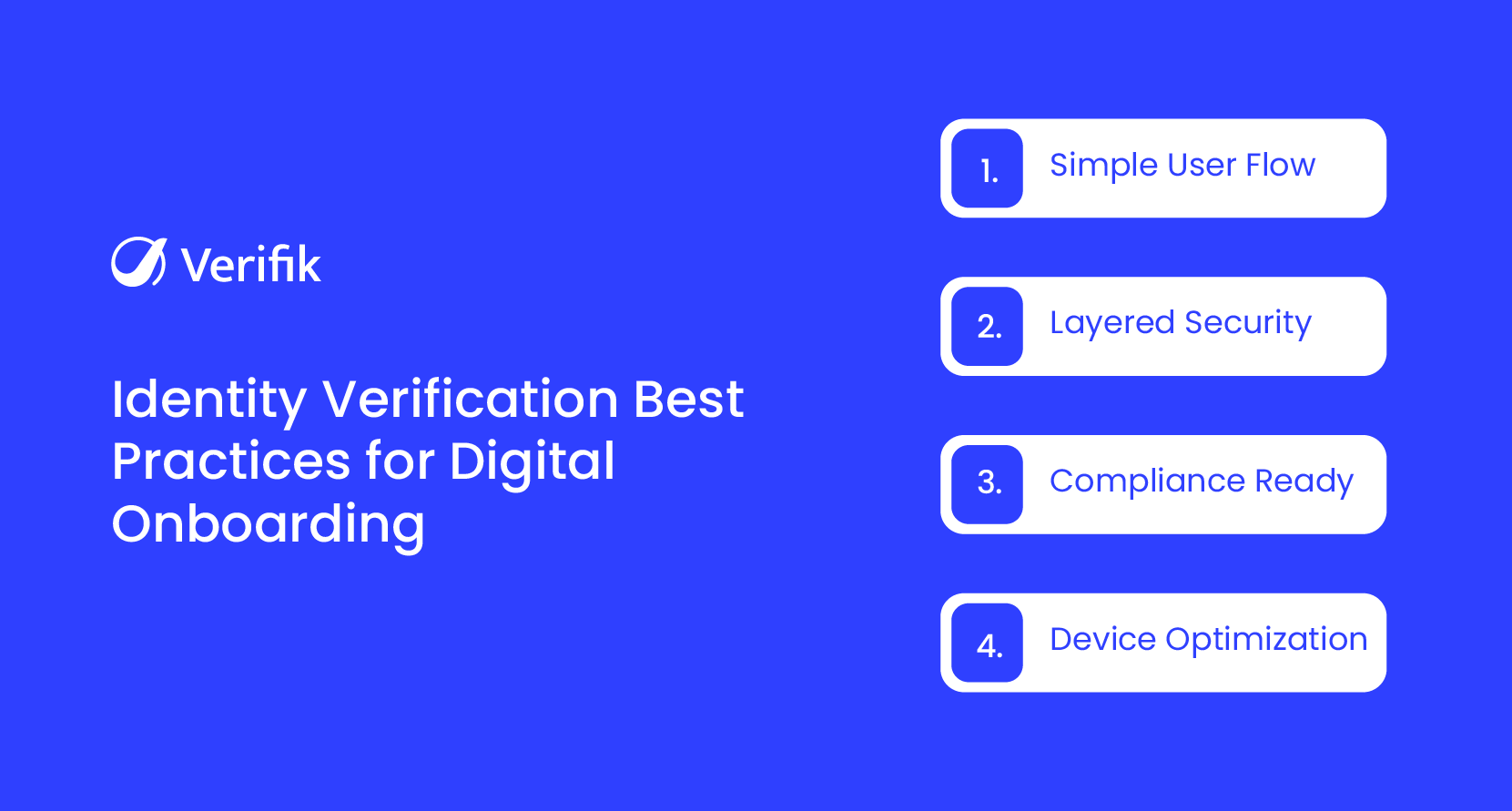
1. Keep the Process Simple for Users
A complicated onboarding flow can lead to abandoned applications. Clear instructions, shorter forms, and automated data capture keep the process moving without overwhelming people. When users can scan documents or complete biometric steps in seconds, they are more likely to finish the journey.
2. Use a Layered Verification Approach
Relying on one method leaves gaps that fraudsters can exploit. Combining document checks, biometrics, OTP verification, and database validation creates a stronger defense. A platform like smartENROLL makes it easier to bring these layers together in a unified, customizable workflow.
3. Ensure Regulatory Compliance
Identity verification is closely tied to KYC, AML, and data protection rules. Aligning the onboarding flow with these requirements from the start helps companies avoid legal issues. It also builds trust with customers who expect their data to be handled responsibly.
4. Optimize for All Devices and Environments
People complete onboarding from different devices, lighting conditions, and network connections. Verification tools should adapt to these variations to avoid frustrating users. Mobile friendly interfaces, consistent biometric performance, and support for multiple document types make the experience smoother for everyone.
Looking for a detailed step-by-step guide to fraud-proof your digital onboarding? See our blog: “The Ultimate Checklist for Fraud-Free Digital Onboarding.”
How Comprehensive ID Verification Platforms Improve Onboarding
End-to-end identity verification solutions remove the complexity that businesses often face during digital onboarding. Instead of piecing together multiple tools, companies use a single workflow that collects user data, scans documents, checks liveness, performs biometric matching, and validates information across databases.
Platforms like smartENROLL follow this model by offering a fully customizable solution that allows businesses to tailor forms, verification steps, and automation rules to fit their needs. This cuts onboarding time, increases security, and improves the overall user journey.
Final Thoughts
Digital onboarding has become a critical part of how companies operate. Strong identity verification protects organizations from fraud, supports compliance, and builds trust with users from the very first interaction. By combining methods like document scanning, biometrics, and database checks with smart automation, businesses can create smooth and secure onboarding experiences at scale.
If you are looking for an all-in-one, customizable identity verification solution for digital onboarding, smartENROLL could be your best bet. Contact Verifik today to book your free demo!