






























Digital onboarding has made it easier than ever for users to access financial services, e-commerce platforms, and other online services. Users can sign up from anywhere, at any time, without visiting a physical location. While this convenience benefits customers, it also creates opportunities for fraudsters to exploit weak verification systems. Identity fraud during onboarding can cost businesses millions, damage their reputation, and lead to regulatory penalties.
Understanding the most common types of identity fraud in digital onboarding is the first step toward preventing financial losses, protecting customers, and maintaining regulatory compliance. This guide explores the major fraud types, how they work, and what businesses can do to detect and prevent them.
What Is Identity Fraud in Digital Onboarding?
Identity fraud in digital onboarding occurs when an individual uses false, stolen, or manipulated identity information to gain unauthorized access to a service, financial account, or platform. This can include using forged documents, impersonating real people, or creating entirely new synthetic identities.
If you want to understand how businesses prevent such risks through secure onboarding processes, explore our detailed guide on “Identity Verification in Digital Onboarding: Methods, Technologies, and Use Cases.”
Unlike traditional in-person fraud, digital identity fraud is harder to detect because interactions happen remotely. Fraudsters rely on automation, deepfake technology, and stolen data to bypass weak verification systems.
Why Digital Onboarding Is a Prime Target for Fraud
As more companies move toward remote onboarding, fraudsters take advantage of faster sign-up processes and limited human oversight. The increased demand for frictionless customer experiences sometimes results in weaker identity checks, making onboarding a high-risk entry point.
Additionally, large volumes of leaked personal data on the dark web make it easier for criminals to impersonate real individuals. Automated onboarding workflows, while efficient, can become vulnerable if not supported by strong verification layers.
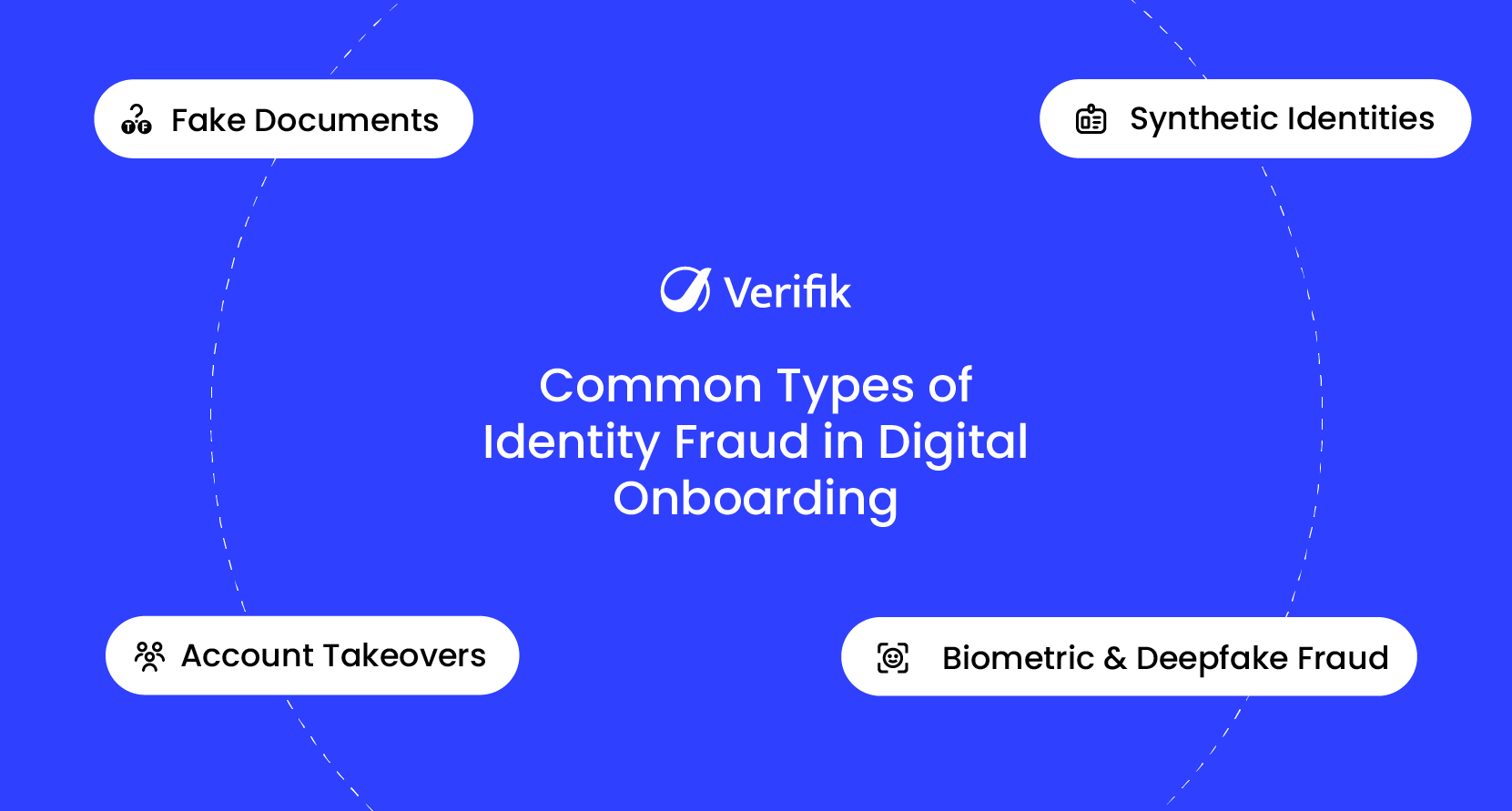
Most Common Types of Identity Fraud in Digital Onboarding
Digital onboarding is vulnerable to multiple fraud tactics. The following are the most common types of identity fraud businesses should be aware of.
-
Fake or Altered Documents
One of the most common methods fraudsters use is submitting fake or tampered documents. This can include forged IDs, passports, driver’s licenses, or utility bills. Advanced fraudsters can replicate fonts, holograms, watermarks, and other security features to bypass basic verification.
Impact:
Businesses that fail to detect forged documents risk onboarding fake users, which can result in financial loss and regulatory penalties. Industries like banking, fintech, and telecom are particularly vulnerable.
Example: A fraudster may submit a manipulated driver’s license to open a bank account and commit financial fraud.
-
Synthetic Identities
Synthetic identity fraud involves creating a completely new identity using a mix of real and fake information. Fraudsters may combine a real social security number with a fake name and date of birth, making detection more challenging.
Impact:
Synthetic identities can be used to open multiple accounts, access credit lines, or commit other forms of financial fraud. Since these identities are partially real, they often pass basic verification systems unless advanced database and risk checks are in place.
Example: A fraudster might create a synthetic identity to obtain multiple online loans, leaving the company with unpaid debts and legal complications.
-
Account Takeovers
Account takeover occurs when a fraudster uses stolen credentials to impersonate a legitimate user. This can happen if login details are leaked, guessed, or obtained via phishing attacks. Once access is gained, fraudsters can make unauthorized transactions, steal sensitive data, or bypass identity verification for further fraudulent activity.
Impact:
Account takeovers lead to significant financial losses and harm user trust. They are especially concerning for banking, fintech, and online marketplaces.
Example: A hacker gains access to an online payment account and uses it to conduct unauthorized transactions.
-
Biometric and Deepfake Fraud
As businesses adopt facial recognition and biometric verification, fraudsters have turned to more sophisticated methods, including deepfakes, manipulated photos, or videos. They attempt to trick liveness detection systems and bypass biometric checks.
Impact:
Without strong biometric verification and liveness detection, organizations are vulnerable to highly advanced fraud attempts. These attacks can compromise sensitive data and damage customer trust.
Example: Using a deepfake video, a fraudster attempts to pass facial recognition to gain access to a secure platform.
How to Prevent Identity Fraud in Digital Onboarding
Preventing identity fraud during digital onboarding requires a strategic combination of advanced technology and well-designed processes to ensure businesses can verify identities accurately while keeping onboarding fast and seamless.
-
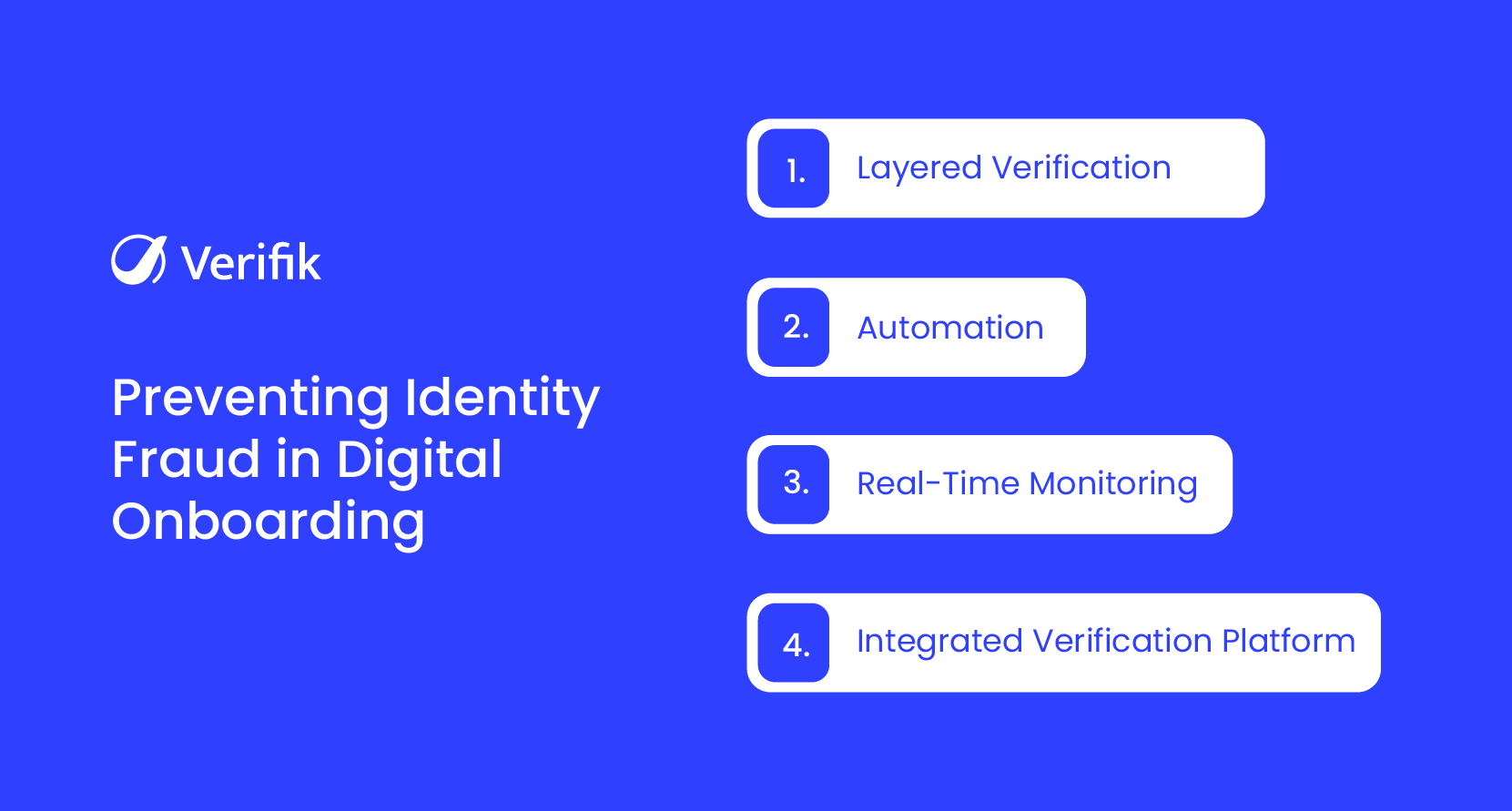
Implement Layered Identity Verification
A single verification method is rarely enough to stop fraudsters. Combining multiple verification layers—such as document verification, biometric checks, OTP validation, and database cross-checks—creates a robust defense. Platforms like smartENROLL allow businesses to integrate all these verification layers into a single customizable workflow, making it much harder for fraudulent identities to bypass the system.
Practical Tip: High-risk users can undergo stricter checks, while low-risk users move through onboarding quickly and smoothly.
-
Automate Verification Processes
Manual checks are slow, prone to errors, and can be easily exploited. Automation using OCR for document scanning, facial recognition for biometrics, and real-time database validation ensures routine verification steps are fast, consistent, and accurate. Automation also allows your team to focus on complex or flagged cases instead of routine approvals.
Example: A fintech company can instantly validate a passport or ID against official records to reduce onboarding time and prevent fraudulent registrations.
-
Enable Real-Time Monitoring and Alerts
Fraud prevention isn’t just about checking documents and biometrics; it’s also about monitoring activity in real time. smartENROLL offers real-time monitoring and alerts, allowing businesses to flag suspicious registrations immediately. This proactive approach ensures that fraudulent attempts are caught early, without slowing down genuine users.
Benefit: Businesses can prevent fraud as it happens, improving both security and operational efficiency.
-
Leverage Integrated Identity Verification Platforms
Using a single, integrated platform ensures all verification steps work together smoothly. smartENROLL combines document scanning, biometric checks, OTP verification, and database validation into one workflow. This integration prevents fraud efficiently while keeping onboarding fast, reliable, and scalable.
Key Advantage: Companies can customize workflows based on risk, regulatory requirements, and user types, creating a secure, adaptable, and scalable onboarding system.
Conclusion
Identity fraud is a growing threat in digital onboarding, and understanding its common types is the first step toward prevention. Synthetic identities, account takeover, document forgery, impersonation, and deepfake attacks all require proactive measures.
By implementing multi-layered verification, leveraging automation, educating users, and using integrated solutions like smartENROLL, businesses can prevent fraud, protect customers, and ensure a seamless onboarding experience.
Want to prevent identity fraud and streamline onboarding? Schedule a free demo of smartENROLL now and discover the benefits firsthand.