





























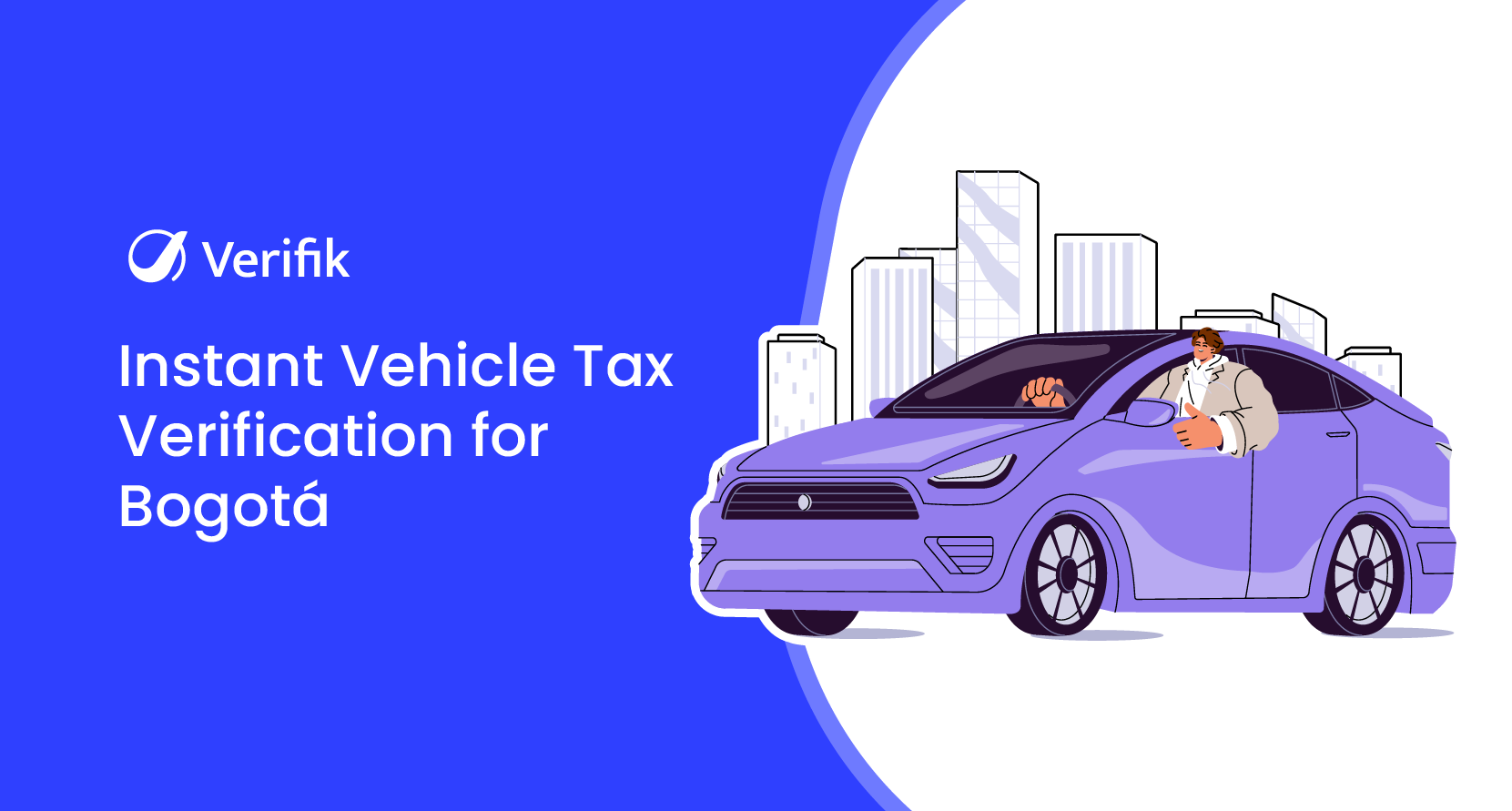
Vehicle tax compliance in Bogotá is crucial for individuals, businesses, and digital platforms that handle vehicles. Failing to verify tax obligations can lead to fines, legal complications, and delays in vehicle registration, ownership transfer, or financing approvals. For businesses managing fleets, vehicle marketplaces, or mobility platforms, the need to check tax status for multiple vehicles quickly becomes overwhelming.
Manual verification via government portals is often slow, prone to errors, and time-consuming. It also makes scaling operations difficult because each vehicle requires individual checks, and exceptions may not be clear.
Verifik’s Bogota Vehicle Tax Verification API addresses these challenges by providing real-time, official, and verified tax information for vehicles registered in Bogotá. By automating tax checks, businesses can reduce risk, save time, and make informed decisions without relying on manual processes or outdated records.
Understanding Vehicle Taxes in Bogotá
Vehicle taxes in Bogotá are mandatory annual obligations applied to cars, motorcycles, and other registered vehicles. These taxes are calculated based on factors such as vehicle value, model year, and classification. Payment is required within specific deadlines set by local authorities.
Failing to pay vehicle taxes on time can result in penalties, interest charges, and restrictions on vehicle-related procedures. For businesses, unpaid taxes can also affect onboarding, insurance processing, and fleet deployment.
Why Staying Tax-Compliant Is Important
Tax compliance is more than a legal requirement in Bogotá. Vehicles with outstanding taxes may face restrictions when being sold, transferred, or insured. For companies that rely on vehicles to operate daily, even one non-compliant vehicle can disrupt workflows and expose the business to financial risk.
Introduction to Verifik’s Bogotá Vehicle Tax API
Keeping track of vehicle tax obligations in Bogotá can be complicated, especially for businesses managing multiple vehicles or platforms that handle vehicle transactions. Verifik’s Bogotá Vehicle Tax API solves this challenge by providing real-time, accurate, and official tax data for any vehicle registered in the city.
With this API, you can instantly verify whether a vehicle has paid its taxes, identify outstanding amounts, and retrieve detailed information for specific fiscal years. It uses the vehicle’s license plate along with the owner’s document type (CC for citizenship card or NIT for tax identification) and document number to fetch verified records directly from official sources.
The API doesn’t just return whether a vehicle is compliant; it provides comprehensive details such as the vehicle’s brand, model, line, plate, fiscal year, total tax obligation, reference numbers, and the current obligation status. This level of detail allows businesses to make informed decisions quickly, whether for fleet management, vehicle sales, financing, insurance, or compliance checks.
How Verifik’s Vehicle Tax Verification API for Bogotá Works
Verifik’s Vehicle Tax API provides a fast, reliable, and automated way to verify tax obligations for vehicles registered in Bogotá. Instead of manually checking government portals, businesses and developers can integrate the API into their platforms to receive real-time, official, and verified data.
Here’s a detailed breakdown of how the API works:
1. Input Required Information
To perform a tax check, the API requires three key pieces of information:
- Vehicle Plate: The license plate of the vehicle without spaces or points.
- Document Type: The owner’s document type, either CC (citizenship card) or NIT (tax identification number).
- Document Number: The owner’s identification number without spaces or points.
These inputs are crucial for accurately retrieving the vehicle’s tax obligation from official sources.
2. Sending the API Request
The API request is made via a simple GET request with the input parameters included. Requests must also include the authorization header with a valid bearer token to ensure security.
Example Flow:
- Authenticate using your API token.
- Provide the vehicle plate, document type, and document number.
- Send the request to the Verifik endpoint for Bogotá vehicle tax verification.
3. Retrieving Verified Data
Once the request is submitted, the API returns structured, real-time information from official government records. The response includes:
- Vehicle Details: Brand, model, line, and plate.
- Fiscal Year: The specific year for which the tax obligation is recorded.
- Tax Obligation Amount: The total tax due for that year.
- Obligation Status: Indicates whether the vehicle is compliant or “Moroso” (has unpaid taxes).
- Reference Numbers: Official identifiers for payment or tracking purposes.
This level of detail allows businesses to make informed decisions quickly.
4. Handling the API Response
The API response is returned in JSON format, making it easy for developers to integrate into systems or applications. Key points for handling the response:
- Check the obligationStatus field to determine if the vehicle has outstanding taxes.
- Retrieve the totalToPay field to know the exact amount owed.
- Extract vehicle details for reporting, compliance tracking, or user notifications.
- Log or store the data for auditing, historical reference, or operational workflows.
By structuring the workflow this way, businesses can automate the verification process for multiple vehicles without errors.
Who Should Use Verifik’s Bogotá Vehicle Tax API
Verifik’s Bogotá Vehicle Tax API is designed to provide real-time, accurate, and official tax information for any vehicle registered in Bogotá. Its automation and reliability make it valuable for a wide range of users across industries. Below is a breakdown of who can benefit most from integrating this API into their operations.
-
Fleet Management Companies
For companies managing fleets of vehicles registered in Bogotá, staying tax-compliant is critical. This API allows fleet managers to check tax obligations for every Bogotá-registered vehicle instantly, identify unpaid taxes, and reduce administrative work to ensure smooth operations without legal or operational delays.
-
Vehicle Marketplaces and Dealerships
Dealerships and online vehicle marketplaces in Bogotá can verify the tax status of vehicles before listing or selling them. The API ensures that only tax-compliant Bogotá-registered vehicles are processed to prevent disputes and delays in ownership transfer, and build buyer trust.
-
Financial Institutions and Lenders
Banks and lenders that provide financing for Bogotá-registered vehicles need to confirm tax compliance before approving loans. Through Verifik’s Bogotá Vehicle Tax API, you can eliminate the risk of unpaid taxes by ensuring that the vehicle is fully cleared of obligations.
-
Insurance Providers
Insurance companies covering Bogotá-registered vehicles must verify tax compliance before issuing policies. Verifik’s API automates this tax verification to reduce errors, prevent delays, and ensure policies are issued only for vehicles in good standing.
-
Compliance Platforms and Government Partners
Regulatory compliance platforms and government-affiliated services can monitor tax obligations for Bogotá-registered vehicles at scale. Real-time and verified data from the API ensures accurate reporting, auditing, and efficient workflow management.
Conclusion
Checking vehicle tax status in Bogotá should not slow down your operations or introduce risk. Manual processes are inefficient and unreliable at scale. Bogotá Vehicle Tax API by Verifik provides instant access to verified tax obligation data to help businesses and developers make informed decisions. With automation in place, compliance becomes simpler, faster, and more reliable.
Simplify vehicle tax verification in Bogotá with Verifik’s API. Instantly check tax obligations, identify outstanding payments, and integrate real time verification into your platform. Contact Verifik today to get started!