 Identity Card
 National Identity Document
 Citizenship ID
 Unique Identity Document
 Personal Identification Document
 Unique Population Registry Code
 Personal Identity Card
 Civil Identity Card
 Identity and Electoral Card
 Check Plate Colombia
 Check Plate Peru
 Check Plate Mexico
 Check Plate Argentina
 Check Plate Chile
 Check Plate USA
 Check Plate Brazil


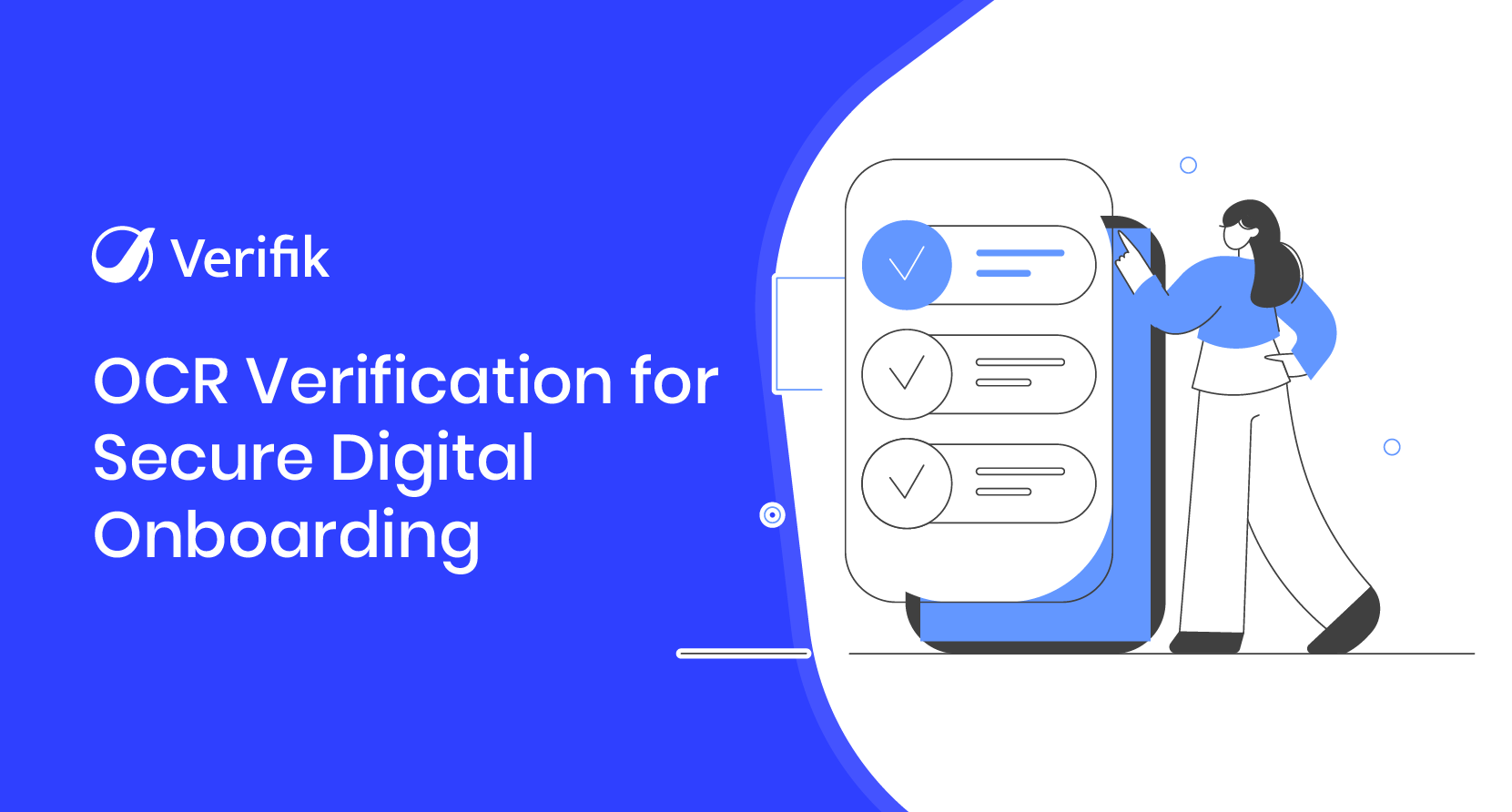
Digital onboarding has become the standard for businesses across banking, fintech, telecom, healthcare, and e-commerce. Customers expect fast, frictionless registration, while companies must meet strict regulatory and fraud prevention requirements. This creates a growing need for identity verification methods that are both secure and efficient.
OCR-based document verification plays a critical role in meeting this demand. By automating the extraction and validation of identity information from official documents, OCR helps organizations streamline onboarding, reduce errors, and strengthen fraud prevention without slowing down the user experience.
This guide explores how OCR-based document verification works, its benefits, real-world use cases, challenges, and best practices for secure digital onboarding.
What Is OCR-Based Document Verification?
OCR, or Optical Character Recognition, is a technology that converts text from images into machine-readable data. In the context of identity verification, OCR is used to extract personal and document information from passports, national ID cards, driver’s licenses, and other official credentials.
OCR-based document verification automates the process of reading identity documents, capturing key details such as name, date of birth, document number, and expiration date. The extracted data is then structured, validated, and compared against other sources to confirm authenticity.
In digital onboarding and KYC processes, OCR reduces reliance on manual data entry, improves accuracy, and accelerates user verification while maintaining high security standards. For a complete overview of identity verification methods used in digital onboarding, explore our detailed blog on “Identity Verification in Digital Onboarding: Methods, Technologies, and Use Cases.”
How OCR-Based Document Verification Works
OCR-based document verification follows a structured process designed to ensure secure and accurate identity validation.
Step 1: Capturing the Document Image
Users upload or scan their identity documents using a mobile device or webcam. The system checks image quality to ensure the document is clear, properly aligned, and readable.
Step 2: Extracting Data Using OCR
OCR technology scans the image and extracts relevant text fields, including personal information and document identifiers. The extracted data is converted into structured digital information.
Step 3: Validating Extracted Information
The system verifies the accuracy of the extracted data by checking formatting, detecting missing details, and identifying inconsistencies that could indicate errors or fraud.
Step 4: Authenticity and Fraud Detection
Advanced verification tools, such as smartENROLL, analyze the document for signs of tampering, forgery, or manipulation. Security features and data patterns are examined to confirm authenticity.
Step 5: Automated Approval or Manual Review
If the document passes verification, onboarding proceeds automatically. Suspicious or high-risk cases are flagged for manual review.
Key Benefits of OCR in Digital Onboarding and Identity Verification
OCR-based document verification delivers measurable advantages for businesses that want to accelerate digital onboarding while maintaining high levels of security, accuracy, and regulatory compliance. By automating document processing and data extraction, OCR helps organizations reduce friction, minimize risk, and scale onboarding operations efficiently.
Below are the key benefits of using OCR in digital onboarding.
-
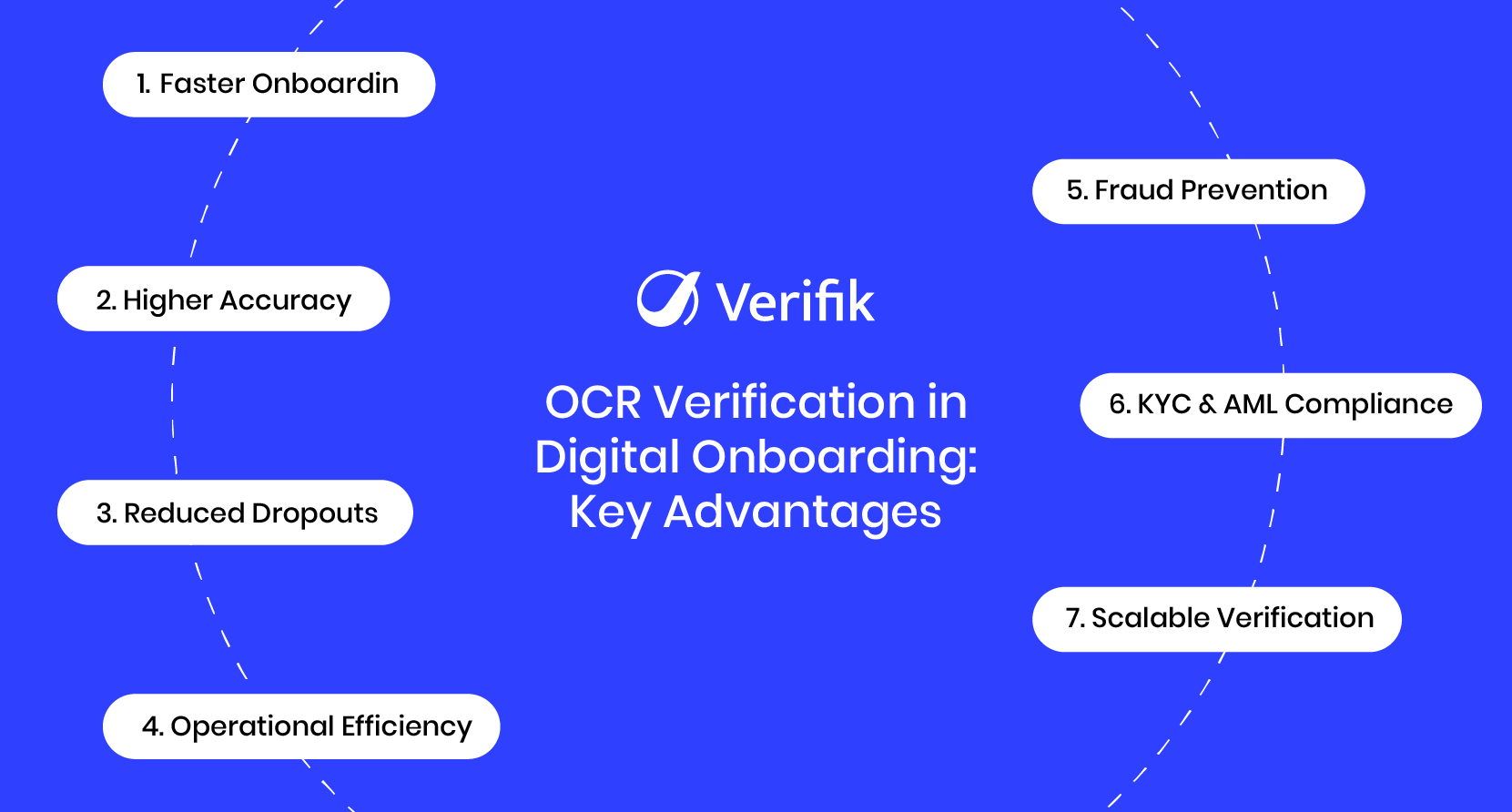
Faster Digital Onboarding
OCR significantly speeds up the onboarding process by eliminating manual document review and data entry. Instead of requiring users to type personal information into long forms, OCR extracts relevant details instantly from identity documents.
This automation reduces onboarding time from hours or days to just minutes, allowing businesses to verify users faster, improve conversion rates, and onboard more customers without increasing operational workload.
-
Improved Accuracy
Manual data entry is prone to errors such as typos, incomplete fields, and inconsistent formatting. OCR minimizes these risks by automatically capturing and structuring information directly from official documents.
By reducing reliance on human input, businesses can ensure more accurate identity data, fewer processing mistakes, and stronger consistency across large onboarding volumes.
-
Lower Dropout Rates
A smooth onboarding experience is critical for retaining users. OCR simplifies registration by allowing customers to upload a document instead of manually entering personal information.
This reduces effort, shortens onboarding time, and creates a more seamless experience. As a result, businesses can lower abandonment rates, improve customer satisfaction, and increase successful account completions.
-
Greater Operational Efficiency
OCR helps organizations scale onboarding without significantly increasing staffing or operational costs. Automated document processing reduces the need for large manual verification teams and lowers the time spent reviewing applications.
By improving efficiency, OCR allows businesses to handle higher onboarding volumes, reduce processing expenses, and allocate internal resources more effectively.
-
Enhanced Fraud Prevention
OCR contributes to fraud prevention by enabling real-time document analysis, data validation, and authenticity checks. When combined with other verification technologies such as biometrics and database validation, OCR helps detect forged documents, identity inconsistencies, and suspicious patterns.
This layered approach strengthens onboarding security and reduces the risk of identity fraud and account misuse.
-
Compliance With KYC and AML Regulations
OCR supports regulatory compliance by enabling accurate record-keeping, consistent identity verification, and reliable audit trails. Businesses operating in regulated industries such as banking, fintech, telecom, and insurance can use OCR to meet Know Your Customer and Anti Money Laundering requirements more effectively.
Automated verification also helps ensure that identity checks are performed consistently and transparently across all users.
-
Scalable Identity Verification
As customer volumes grow, OCR enables organizations to scale onboarding operations without sacrificing speed or accuracy. OCR systems can adapt to new document formats, languages, and regulatory requirements, making them a future-ready solution for expanding digital services.
Platforms like smartENROLL integrate OCR with biometric verification, OTP validation, and database cross-checks to creating a faster and secure onboarding workflow.
Best Practices for Implementing OCR in Digital Onboarding
Below are some best practices for using OCR effectively in digital onboarding.
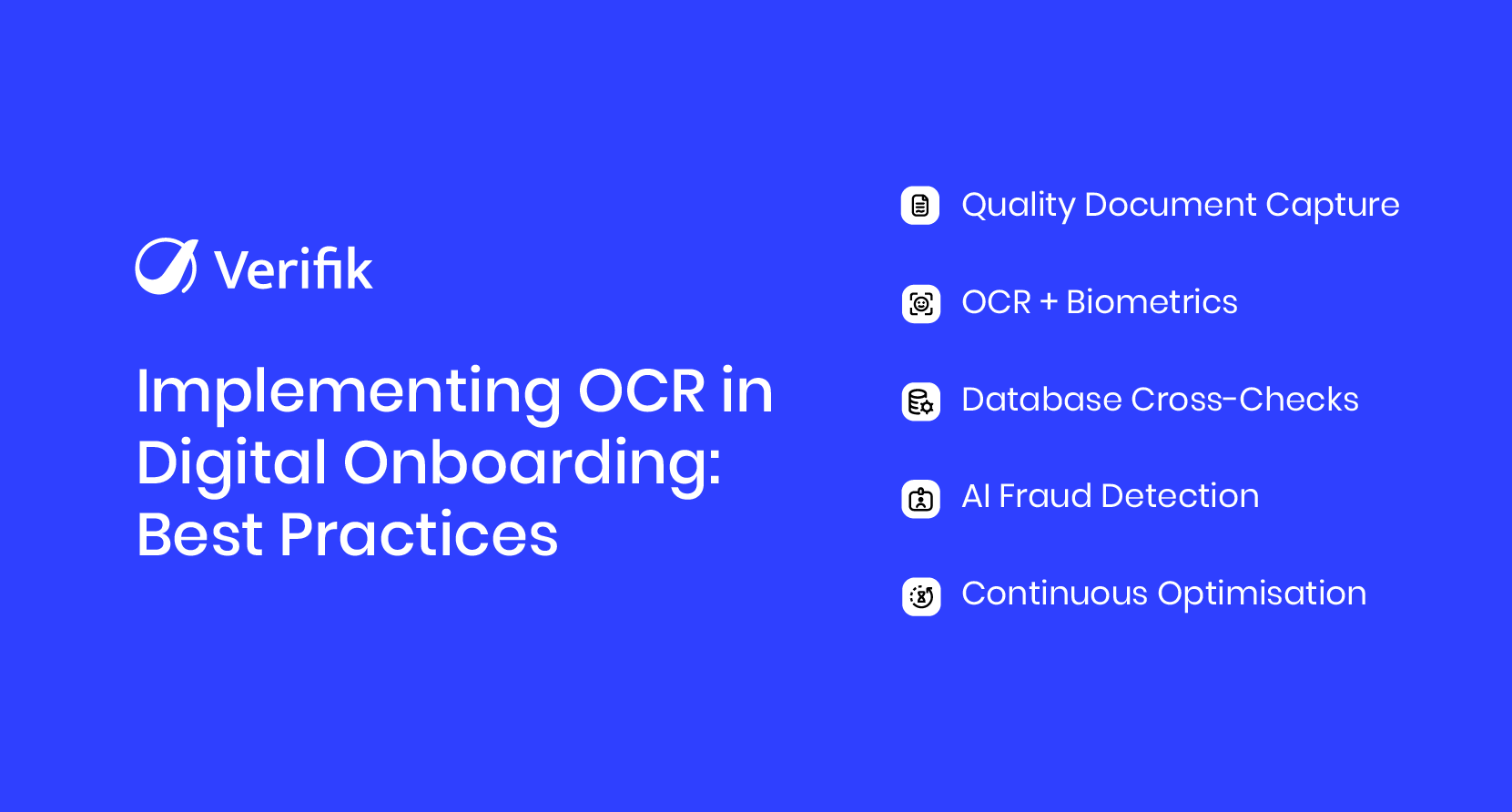
Ensure High-Quality Document Capture
Provide users with clear instructions and real-time feedback to help them submit readable document images.
Combine OCR with Biometric Verification
Pairing OCR with facial recognition and liveness detection ensures the document belongs to the actual person onboarding.
Cross-Check Data with Trusted Databases
Validating extracted information against government or trusted databases strengthens identity verification.
Use AI to Detect Fraud and Tampering
Artificial intelligence can help identify forged documents, unusual patterns, and suspicious onboarding behavior.
Monitor Performance and Continuously Optimize
Tracking OCR accuracy, processing times, and rejection rates helps improve system performance and user experience over time.
Summing Up
OCR-based document verification is a vital tool for businesses seeking to balance security, compliance, and customer convenience in digital onboarding. When integrated with biometrics, database validation, and intelligent fraud detection, OCR forms a strong foundation for modern onboarding systems.
Solutions such as smartENROLL demonstrate how OCR and advanced identity technologies can work together to support secure, efficient, and scalable user onboarding. Book a free demo today and see it in action!